


Optimizing Drilling Fluid Properties for Wellbore Stability: Vertechs' Approach


Talk to a seasoned mud engineer long enough and they'll tell you the same thing: the wellbore doesn't care about your schedule. A shale section that looks manageable on paper can start absorbing drill mud within hours, and by the time the viscosity readings climb past normal range, you're already behind. This is the reality that drilling teams face on practically every well — and it's why the composition and behavior of drilling fluid matters far more than most project timelines like to account for.
Vertechs has spent years working inside this problem. The company, headquartered in Chengdu with operations across the Middle East and North America, approaches drilling fluid not as a commodity service but as an engineering discipline with real consequences for well outcome. That distinction sounds minor until you've watched a project burn two weeks of rig time because the drill mud density window was poorly defined going into a high-pressure zone. At that point, the philosophy behind your fluid system stops being abstract.
The wellbore stability challenge comes down to competing forces. When a drill bit opens up a new section of formation, the rock around that hole is immediately trying to re-establish equilibrium — either by collapsing inward if the drilling fluid pressure is too low, or by fracturing and swallowing fluid if it's too high. The density of the drill mud has to walk a line between those two failure modes, sometimes with as little as 0.1 ppg of tolerance separating them. In deepwater wells or formations with abnormally pressured zones, that window gets tighter. Add reactive shale into the mix — clay minerals that chemically interact with water-based systems and physically swell into the borehole — and you're managing multiple simultaneous risks with one fluid system.
Drill in fluids occupy a specialized corner of this discipline. Unlike the heavier drilling fluids used in casing sections, drill in fluids are engineered specifically for the reservoir interval, where the primary concern shifts from pure mechanical stability toward minimizing invasion damage into the productive formation. The chemistry here matters enormously — you need enough filtration control to protect permeability while still maintaining adequate pressure support, and the bridging agents used for fluid-loss control have to be sized to break down or dissolve during cleanup rather than permanently plugging pore throats. Vertechs treats drill in fluid design as its own branch of work, separate from the broader drilling fluid program, because the consequences of getting it wrong show up later in production rather than immediately on the rig.
The role of individual drilling additives within these systems often gets glossed over in high-level discussions about wellbore stability, but the specifics are where field performance actually lives. Shale inhibitors, for instance, suppress clay hydration through ionic exchange mechanisms — potassium chloride is the classic example, though more sophisticated polymer-based inhibitors have mostly replaced it in complex shale formations. Lubricants get added to reduce the coefficient of friction along the drill string, particularly in extended-reach or deviated wells where torque and drag climb to levels that can actually damage equipment. Weighting materials — barite being the standard, though manganese tetroxide has gained ground in certain applications — adjust the drill mud density. Each drilling additive interacts with the others, and changing one component without understanding those interactions is a reliable way to introduce new problems while solving old ones.
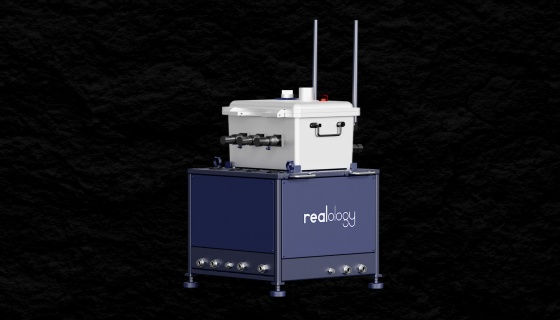
Vertechs manages this complexity partly through formulation expertise built from field projects across varied geological settings, and partly through the monitoring infrastructure they've developed around their fluid systems. Their REALology Intelligent Drilling Fluids Monitoring System runs continuously alongside drilling operations, capturing viscosity, density, and other key parameters automatically rather than waiting for periodic manual tests. The practical value of this kind of drill inspection capability shows up most clearly during transitions — when the bit moves from one lithology to another, or when the well passes through a pressured interval that wasn't fully characterized from offset data. A sudden viscosity change that would take 30 minutes to notice through manual sampling shows up in the REALology data almost immediately, giving the mud engineer an early signal before the anomaly compounds into something harder to correct.
Real-time drill inspection also changes the decision-making dynamic on the rig floor. Instead of relying on end-of-tour reports to identify that the drill mud was running heavier than planned through a particular section, the engineer has that information as it's happening. Adjustments to drilling additive concentrations or dilution rates can be made proactively, before the rheology drifts far enough to affect hole cleaning or cause differential sticking. It's a shift from pattern-recognition-after-the-fact toward something closer to active process control — and in terms of reducing non-productive time, that shift has real dollar value.
The lost circulation problem sits somewhat apart from the stability challenge but connects back to it. When drilling fluid begins disappearing into natural fractures or induced fractures in the formation, the hydrostatic column drops, wellbore support is compromised, and the risk of a more serious well control event increases. Vertechs' RWSS technology addresses this by incorporating a specialized ultra-low invasion drilling additive — ULIA — directly into the circulating system. When this material contacts the formation face, it forms a thin, pressure-bearing sealing film across microfractures and micropores, effectively widening the safe operating window for mud weight. The companion HPIT tester gives engineers a quantitative read on how well the seal is holding under downhole pressure conditions, which removes the guesswork from deciding whether the treatment is working or whether additional concentration is needed.
Environmental considerations around drilling fluid management have grown more concrete in recent years — less about general sustainability messaging and more about specific regulatory requirements around discharge, onshore containment, and additive toxicity. Vertechs has developed water-based drill mud formulations that match the performance of oil-based systems in a number of key areas, particularly regarding shale inhibition and thermal stability. Biodegradable drilling additives are used where the chemistry permits it without compromising the fluid's performance in the target formation. These aren't marketing positions — they reflect engineering choices made formation by formation, based on what the well actually requires.
Putting all of this together: what Vertechs is doing with drilling fluid engineering is less a product and more a methodology. It starts with a detailed characterization of what each formation interval is going to demand from the fluid system, moves through the design of drill in fluids, drill mud density schedules, and drilling additive packages tailored to those demands, and runs through the entire drilling operation with live drill inspection data informing adjustments along the way. The wellbore doesn't care about your schedule — but with the right fluid system and the right monitoring infrastructure behind it, you at least have a fighting chance of making it care a little less.
Vertechs Group develops intelligent energy technology solutions across fluids monitoring, wellbore strengthening, pressure control, and digital well construction. More at www.vertechs.com, contact us. Let's work together to achieve excellence in energy technology.
Comments