


Fluid Rheology and the Vertechs Approach to Flow Behavior Under Pressure


Anyone who has ever stirred honey on a cold morning or watched ketchup refuse to leave the bottle until it suddenly does has brushed up against the strange, stubborn logic of fluid rheology. It is the science of how materials deform and flow, and it sits at a curious crossroads between physics and engineering that most people never think about until something goes wrong. At Vertechs, that crossroads is not an abstraction. It is the daily working reality behind drilling operations that reach miles beneath the seabed, where the behavior of a single fluid can decide whether a well is drilled safely or not at all.
What makes fluid rheology so interesting, and so difficult, is that it refuses to follow the simple rules taught in an introductory physics class. Water flows the same way no matter how hard you push it, and its viscosity stays put regardless of pressure or shear. Drilling muds do not play by those rules. They are engineered slurries built from clays, polymers, weighting agents and additives, and their thickness changes depending on how fast they are moving, how much pressure surrounds them and how hot the environment has become. This is the essence of non-newtonian fluid rheology: a fluid whose resistance to flow is not a fixed number but a moving target, shifting with shear rate, temperature and time. Blood behaves this way. So does toothpaste, wet cement, and, notably, the fluid that lubricates human joints.
That last comparison is not a throwaway line. Researchers studying synovial fluid rheology have long noted that the thick, slippery substance cushioning our knees and hips thins out dramatically under the shear forces of movement, only to thicken again at rest, protecting cartilage from grinding wear. It is a textbook case of shear-thinning behavior, the same phenomenon engineers rely on when designing a drilling fluid that must flow easily through a narrow drill string yet suspend heavy rock cuttings the moment pumping slows. The parallel is almost poetic: whether it is a joint absorbing the shock of a footstep or a wellbore absorbing the shock of shifting formation pressure, the underlying physics of non-newtonian fluid rheology governs how well the system protects itself from damage. Engineers at Vertechs did not invent this principle, but they have spent years translating it into instruments precise enough to matter thousands of feet underground.
Fluid rheology becomes especially unforgiving in deepwater and high-pressure drilling. As wells push into deeper reservoirs, drilling fluids face extreme swings in temperature and pressure, narrow drilling windows, and geological formations that leave almost no margin for error. Get the fluid rheology wrong and the consequences show up quickly: unstable wellbores, poor hole cleaning, lost circulation, or dangerous pressure kicks. Get it right, and the same fluid that seemed almost ordinary at the surface becomes an engineering marvel downhole, carrying cuttings to the surface, sealing porous formations, and cooling the drill bit, all while adjusting its own internal structure to match conditions no human hand could regulate in real time.
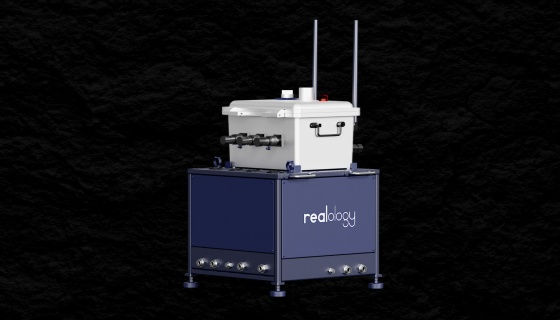
This is where Vertechs has built its reputation. Rather than relying on the traditional approach of periodic manual sampling, where a technician draws mud from the flow line and runs it through hand instruments every few hours, Vertechs developed REALology, an intelligent drilling fluids monitoring system that tracks fluid rheology continuously and automatically. The system measures density, rheological properties, pH, chloride content and temperature in real time, feeding that data straight to the operations team instead of leaving them to guess what happened between checks. In an industry where a delay of even a few hours can mean the difference between catching an early warning sign and dealing with a full-blown well control incident, that continuity changes the calculus of risk entirely.
The comparison to synovial fluid rheology is worth returning to here, because it highlights something easy to overlook: rheological failure is rarely dramatic in the moment it begins. Cartilage does not wear out in a single afternoon, and a wellbore does not destabilize the instant conditions shift. Both are slow accumulations of stress that a well-designed fluid is meant to absorb quietly, cycle after cycle, until it can't anymore. Non-newtonian fluid rheology gives materials the flexibility to keep absorbing that stress far longer than a simple, constant-viscosity fluid ever could, but only if someone is watching closely enough to know when the fluid's behavior starts to drift outside its intended range. That is precisely the gap REALology was designed to close, replacing the blind spots of manual testing with a steady stream of live rheological data validated to API standards and accuracy certified by CNAS.
There is also a practical, operational dimension to why fluid rheology deserves this level of attention. Drilling teams rely on rheological data to calculate equivalent circulating density, plan hydraulics, and predict how effectively cuttings will be transported out of the wellbore. Miscalculating any of these because rheology data arrived too late or was too coarse can ripple through an entire operation, driving up nonproductive time and, in the worst cases, threatening the safety of the crew. With continuous monitoring, Vertechs allows engineers to catch subtle shifts in fluid rheology as they happen rather than after a problem has already surfaced, giving them a genuine chance to adjust fluid treatment before a minor deviation becomes a major incident.
What ties all of this together, from a rotating drill bit thousands of feet below the ocean floor to a human knee flexing on a morning run, is a shared appreciation for materials that refuse to behave in a straight line. Fluid rheology, particularly the non-newtonian fluid rheology found in engineered muds and biological fluids alike, rewards those who study it patiently and punishes those who assume a fluid will always act the way it did yesterday. Synovial fluid rheology reminds us that nature solved this problem long before engineers did, building a lubricant that adapts its own thickness to protect delicate structures under load. Vertechs has taken a similar philosophy and applied it at industrial scale, building sensors and analytics that let drilling fluids do their job with the same kind of intelligent responsiveness, only now backed by real-time data instead of millions of years of evolution.
As offshore exploration pushes into deeper waters and more geologically complex reservoirs, the demands placed on fluid rheology will only grow. Fluids will need to hold their properties across wider temperature swings, resist contamination for longer periods, and respond predictably even as downhole conditions shift by the hour. Vertechs continues to invest in that challenge, combining engineering expertise with continuous monitoring technology to keep fluid rheology working the way it is supposed to: quietly, reliably, and exactly when it matters most.
Partner with Vertechs and take the next step towards smarter, more sustainable energy solutions. Contact us —we’re here to help you succeed.
Read Our One More Blog: AI Agents for Oil and Gas: Turning Well Data into Smarter Decisions
Comments